
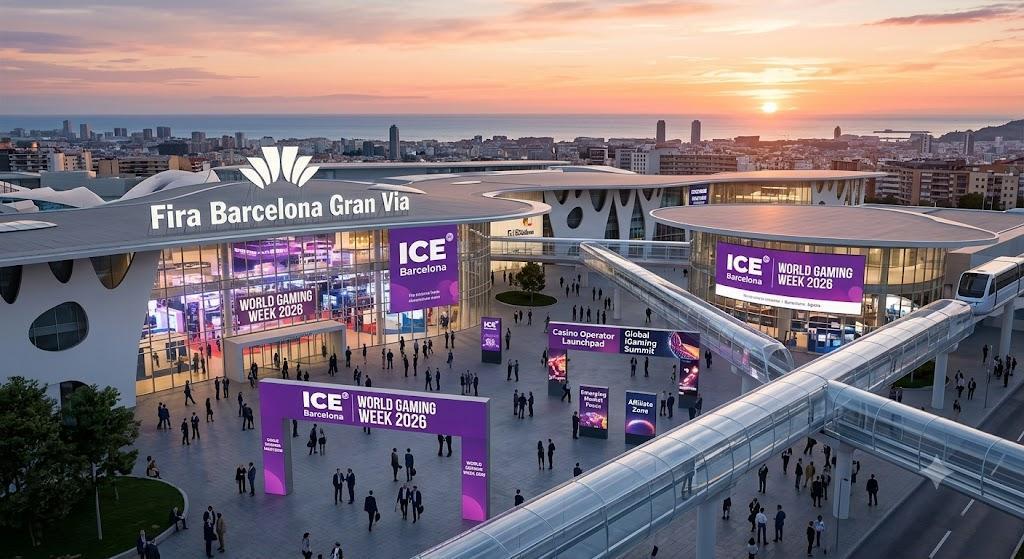
January 19, 2026, marks the end of an era. The relocation of ICE from London to the Fira Barcelona Gran Via isn’t just a change of venue; it is a tectonic shift for the entire B2B gaming supply chain. For over a decade, London served as the predictable heart of the industry. That stability is gone. Barcelona functions as the new gravitational center for global procurement, and the math behind this shift is undeniable.
The move opens a direct corridor to Latin America. A 40% spike in attendance from the LatAm region isn’t a coincidence—it is a clear signal of where the growth capital is flowing. Operators need to view the Academia America Latina seminars not as educational fluff, but as a mandatory orientation for anyone serious about securing localized payment gateways and compliance frameworks. The catch? Deal velocity in Barcelona will be punishing. Three days is not enough time to negotiate revenue shares, finalize software procurement, and vet affiliate networks if you arrive without a battle plan. If you are not there with a solidified agenda, you are effectively paying to watch your competitors secure the market share you wanted.
The September Bifurcation: The Great Q4 Logistical Headache
September 2026 presents a massive tactical problem for enterprise-level operators. The scheduling collision between SBC Summit in Lisbon and G2E in Las Vegas forces a choice that few wanted to make. You cannot be in two places at once. The industry is effectively split down the middle.
G2E remains the undisputed fortress of North American commercial and tribal gaming. The themes here are rigid: regulatory scrutiny, sweepstakes, and the desperate, ongoing struggle to integrate land-based loyalty with digital platforms. It is expensive—booth costs between $35,000 and $55,000 are the price of admission for access to U.S. state gaming boards—but the ROI is concentrated in political and regulatory access.
SBC Lisbon occupies the opposite end of the spectrum. It caters to the sprawling, fragmented ecosystems of Europe, Africa, and Latin America. The conference focuses on modular tech, payment rails, and multi-wallet integration. Operators with global footprints face an ugly reality: they must bifurcate their leadership teams. One half of the C-suite will be debating U.S. state-by-state legislative hurdles in Nevada, while the other half discusses modular PAM architecture in Portugal. This split inevitably slows down cross-pollination. European innovations in multi-jurisdictional compliance will take months to reach U.S. tribal operators, and vice versa. It is inefficient, expensive, and unavoidable.
Brazil: The Entry Fee is Not Negotiable
Brazil is the only conversation that matters when we talk about growth. With a regulated market projected to exceed $9.2 billion by 2033, the sheer scale of the opportunity attracts every major player on the planet. The market is not for the faint of heart, though. The federal licensing fee of R$ 30 million, combined with high minimum capital requirements—reaching R$ 80 million for a combined license—acts as a brutal filter.
Compliance is the actual product here. Operators are not just launching a site; they are building a local entity, hiring local directors, and integrating directly with the Central Bank’s PIX system. The newest online casinos entering the market are hyper-focused on these specific technical mandates, often prioritizing compliance-aware engineering over frontend flair. If your platform cannot report suspicious betting activity via SIGAP or handle facial biometric KYC, you are not a contender. You are a liability. Successful market entry in Brazil requires a structural commitment that most white-label operators simply cannot afford to make.
The Tech Stack or Death
Legacy technology is a sinking ship. The industry has reached a point where monolithic software stacks are a liability, not an asset. Maintenance costs for these systems are ballooning, and their development cycles are far too slow to keep pace with global regulatory changes.
The shift is moving toward modular Player Account Management (PAM) systems. This architecture treats the core, the sportsbook feed, the game aggregator, and the payment gateway as distinct, pluggable modules. When a regulator in Germany mandates a new stake cap or an age-based loss limit, a modular PAM allows the operator to swap out that specific microservice without taking the entire site offline. It is the only way to scale across multiple jurisdictions simultaneously.
Artificial Intelligence has also exited the “innovative feature” phase. It is now a defensive utility. Real-time monitoring of transactional anomalies and biometric mismatches is the baseline expectation for any operator managing risk. Vendors are selling specific, measurable ROI—automated churn reduction, dynamic difficulty adjustment, and AML protection. If your pitch relies on the word “AI” without backing it up with hard data on cost reduction or player retention, you are wasting everyone’s time.
The World Cup Catalyst
June 11, 2026, is the date that dictates the entire first half of the year. The FIFA World Cup in North America is the single largest betting event in history, and it serves as the ultimate deadline for operator launches.
Engagement mechanics define the winners here. Savvy operators do not wait until the kickoff to acquire users. They use the Q1 and Q2 exhibition circuits to procure the necessary gamification software to run pre-tournament campaigns. They force the transition from casual casino player to sports bettor weeks in advance by tying turnover milestones to World Cup free bets. Platform stability is non-negotiable. If your site crashes during a World Cup match, you lose the player forever. Real-time betting infrastructure is not a luxury for this cycle; it is the core of your brand equity.
Follow the VC Money
Venture capital has effectively abandoned the “hit-driven” game studio model. The days of funding a small studio based on a single, shiny slot concept are over. Investors have realized that consumer-facing acquisition is a race to the bottom, and they are now pouring capital into the plumbing of the industry.
Startups pitching at SiGMA Rome need to focus on infrastructure: data streaming pipelines, AI-assisted development tools, and compliance automation. If you are building the tools that help other operators lower their customer acquisition costs or automate their regulatory reporting, the money is there. Founders who approach this market with a strategy that highlights scalability and defensible data models find a willing audience. Anyone else is just background noise in a crowded room.
A Map, Not a List
The 2026 calendar is a test of organizational discipline. The relocation of major events and the overlap of global summits demand a level of strategic planning that the industry has rarely required. Operators who survive will treat these summits as a connected ecosystem—a series of gates they must pass through in the right order.
Success is not about attending the most parties in Barcelona or Lisbon. It is about timing your affiliate outreach in the spring, solidifying your modular architecture before the summer rush, and managing your executive bifurcations in the fall. The regulatory walls are getting higher, the cost of entry is rising, and the technical requirements are becoming more granular. You have the map; now you have to decide if you are the one holding the compass or the one getting lost.