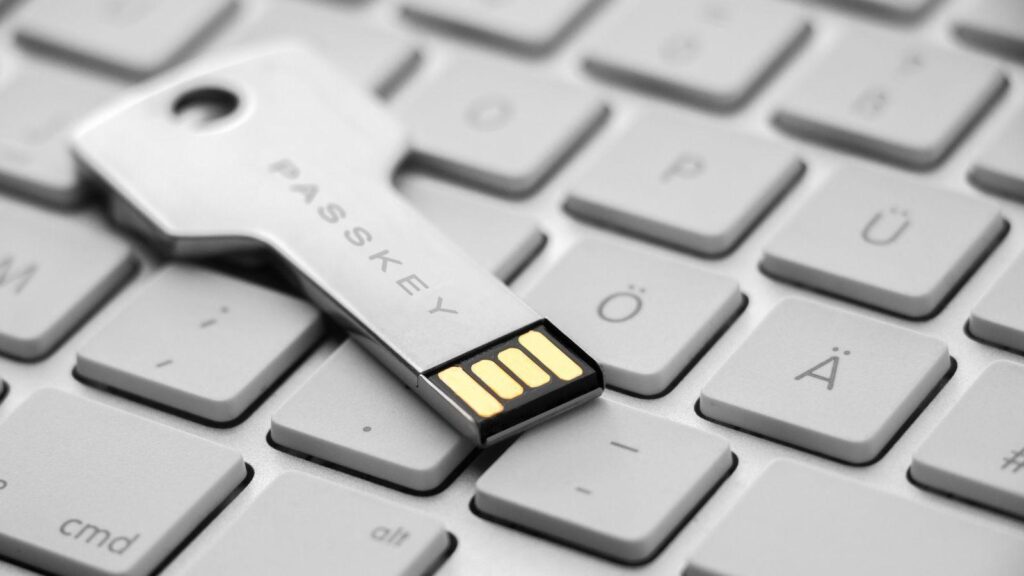
Passkeys are easier to understand through normal login situations than technical definitions. With a password, access depends on remembering or retrieving a secret string. With a passkey, a device proves access after the user confirms identity with a fingerprint, face scan, device PIN, or another screen-lock method.
That changes several familiar problems at once. Forgotten passwords become less relevant, credentials are not reused in the same way across unrelated accounts, and regular sign-ins can require fewer steps. Passkeys are already far beyond the experimental stage in 2026, but passwords remain important because not every site supports them and recovery still varies between platforms.
What Changes When a Password Disappears
Consider a person opening the same account every morning. With a password, the login may require an email address, password, and possibly another verification step. A password manager can reduce that friction, but the account is still protected by a reusable credential.
With a passkey, the same login may require only selecting the account and approving access with Face ID, a fingerprint, or the device PIN. For someone managing dozens of accounts, that is the most visible benefit. There is less need to create, remember, reset, or manually retrieve passwords every time an account is accessed.
Recovering Access Works Differently
Passwords and passkeys fail in different ways. A forgotten password normally leads to a reset through email, SMS, recovery codes, or another verification method.
Passkeys remove the memory problem but make device and credential-manager recovery more important. If a phone is lost, the credential does not necessarily disappear with it. Systems such as iCloud Keychain can synchronize keys across approved devices tied to the same account.
The practical difference is that password users need to recover a secret; passkey users need to keep their device account and recovery options in good order.
Password Reuse Stops Being Part of the Problem
Password reuse remains attractive because it is convenient. Someone may use a familiar password for email, shopping, gaming, and entertainment simply because remembering several different ones is harder.
Passkeys remove that shortcut. Each key is tied to a specific account and website or application rather than being reused across unrelated sites.
The difference becomes noticeable on accounts used regularly. A passkey-style sign-in at Icecasino could, for example, make account access quicker without changing the separate processes used for deposits, withdrawals, identity verification, or other controls. Authentication deals with getting into the account; it does not replace the checks that happen afterward.
Signing In Away From a Personal Device
Passwords are easy to type on almost any computer, which is useful when signing in away from a personal device. Passkeys can still work in that situation, but the process is different.
A nearby phone can sometimes approve the login through a QR-based cross-device flow, allowing the key to remain on the user’s own device rather than being stored on the borrowed computer.
That can feel unfamiliar at first, but it reduces the need to type account credentials into devices that are not personally controlled.
Passkeys Have Moved Into the Mainstream
Passkeys are now being used at a scale that makes “mainstream” a reasonable description. FIDO Alliance research published in 2026 found that:
- 90% of surveyed consumers were familiar with passkeys.
- 75% had enabled one on at least one account.
- 49% used them regularly when available.
- 68% of surveyed organizations had deployed, piloted, or were rolling out passkeys for employees.
FIDO also estimates that around 5 billion such keys are in active use worldwide. Those figures show broad adoption, but not universal replacement. Some accounts use such keys as an optional login method while retaining passwords or other recovery methods, and others still do not support passkeys.
Passwords Still Win on Familiarity
Passwords are universally understood. They work across almost every device and service, and users already know what to do when one is forgotten. Passkeys ask users to think differently about where credentials are stored, how they synchronize, and what happens when a new device is added.
That familiarity is one reason passwords will not disappear immediately. A strong, unique password stored in a specific app remains a sensible option wherever keys are unavailable.
Passkeys reduce how much responsibility sits with the user during each login. There is no password to invent, remember, or type, and the private credential itself is not stored by the website.
Passwordless Login Is Mainstream but Not Universal
For everyday users, the strongest case for passkeys is convenience combined with fewer reusable credentials. They make frequent sign-ins faster, eliminate forgotten-password problems for supported accounts, and can move across devices through credential managers.
Passwords still remain relevant for unsupported services, fallback access, and some recovery flows. In 2026, passkeys have become mainstream enough for regular use, while passwords are gradually moving from the default login method toward a fallback role.