
The $700 Tuesday Night Mirage
Let’s be real. The working-class illusion of casually catching a local ballgame after work died over a decade ago. A standard family of four will burn through roughly $691 just to sit in the bleachers at an average NFL game today. That figure—tracked relentlessly by the Fan Cost Index—feels completely disconnected from reality. Try pulling off that exact same Sunday trip in a premium market like Las Vegas or Green Bay. Suddenly, your wallet is bleeding well over $800. All that cash just secures basic admission, some wildly mediocre hot dogs, and a spot on a slab of cracked asphalt. This financial squeeze isn’t an accident of general inflation; it is the direct result of algorithmic dynamic ticket pricing.
Right now, the shadowy market for dynamic ticket pricing is worth a cool $2.4 billion. Wall Street expects that massive racket to double over the next decade. Black-box algorithms are constantly scraping the web. These AI engines digest real-time weather forecasts, local social media moods, and competitor pricing to squeeze every possible dime out of your ticket purchase. Prices literally morph by the hour.
Look closer and you realize the Federal Trade Commission’s new Junk Fees Rule operates like a simple band-aid on a massive bullet wound. Ticketing platforms face steep $51,000 fines per infraction if they attempt to hide convenience fees from buyers. However, the act of dragging exorbitant markups into the daylight does absolutely nothing to lower the actual cost of entry. Market elasticity simply passes directly to the fan, forcing a massive consumer migration away from the physical bleachers and back into the living room.
Streaming Packages Are Just Legacy Cable Wearing a Fake Mustache
Your home television setup was originally supposed to be the great financial escape hatch. Cord-cutting promised a utopian, ad-free environment where you only paid for the content you actually consumed. Frankly, the entertainment conglomerates played a masterful bait-and-switch on the American public. Global spending on live sports media rights will shatter $110 billion annually over the next decade. Tech giants like Amazon and Apple routinely drop billions just to secure exclusive broadcast windows. Someone has to fund that monumental arms race, and the bill lands squarely on the viewer.
The effort of piecing together Netflix, Peacock, Paramount+, and a virtual provider like YouTube TV just to secure local regional sports networks will easily drain $150 to $160 from your bank account every single month. That monthly bill rivals the bloated legacy cable contracts we all gleefully canceled ten years ago. Savvy consumers fight back by treating streaming services as temporary utilities rather than permanent lifestyle fixtures. Subscription rotation—the strategy of aggressively canceling a platform the exact morning after a championship game—is the only mathematically sound way to survive the modern broadcast landscape. A smart pairing of that aggressive churn strategy with a one-time $30 investment in a NextGen TV over-the-air antenna reclaims even more leverage. Major terrestrial networks still hold the broadcasting keys to the Super Bowl and weekend golf majors, beaming them into your home in uncompressed 4K for absolute zero monthly cost.
Hacking the Brain’s Dopamine Board Without Burning Cash
Sure, sticking an antenna on your roof stops the immediate financial bleeding. The problem is that merely staring at a screen never fully replaces the raw, throat-shredding adrenaline of a stadium. We are fundamentally wired to want personal stakes. Real excitement requires real friction. Behavioral economists Daniel Kahneman and Amos Tversky identified a massive psychological roadblock to this thrill: loss aversion. Our cognitive wiring dictates that the psychological pain of losing twenty dollars is twice as severe as the fleeting joy of winning that exact same amount.
The catch? The real-money betting industry forces you right into that exact high-stress anxiety loop. That friction frequently overshadows the actual enjoyment of the sporting event itself, a problem currently amplified by a massive jurisdictional war playing out across the United States. The Commodity Futures Trading Commission aggressively treats real-money prediction markets as financial swaps. State gaming regulators clash directly with that federal stance, viewing those platforms as unlicensed sportsbooks. The legal burden of navigating that regulatory minefield is exhausting for operators and highly precarious for everyday users.
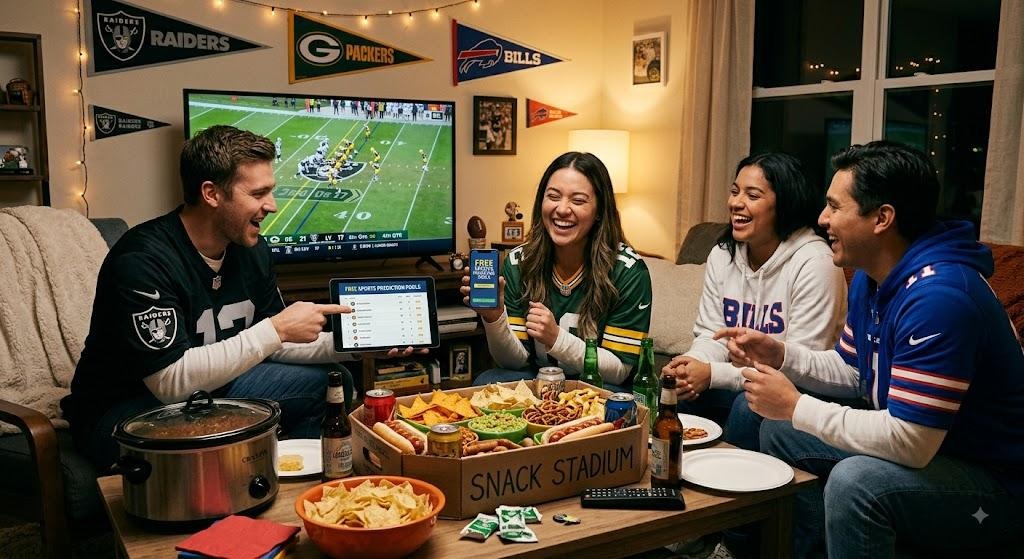
The smartest pivot in modern sports entertainment bypasses both the financial anxiety and the federal regulators entirely. Digital platforms have effectively weaponized zero-risk bias. The real insider move is simple: jump into free sports prediction pools. You get to guess game outcomes, player statistics, and match narratives for actual cash prizes. Because you never deposit a single cent of your own capital, the deep-seated fear of financial loss evaporates instantly. Your brain receives the exact same dopamine flood associated with competitive anticipation, yet your bank account remains untouched.
From an industry perspective, these platform operators are not just running corporate charities. The deployment of these zero-fee games serves as a highly efficient customer acquisition funnel. Corporations capture valuable behavioral data without forcing users through the abrasive friction of credit card deposits or exhaustive identity verification hurdles. You get enterprise-grade interactive software for free; they map macro consumer engagement trends. These gamified micro-commitments transform a Tuesday night regular-season slog into a fiercely competitive, highly interactive experience between you and your peers.
The Strategic Architecture of the Living Room Counter-Culture
A zero-cost interactive app effectively replaces a $150 stadium ticket, but true fandom requires physical, communal architecture. Social Identity Theory proves that we do not just cheer for laundry; we bond over the deeply shared human need for collective belonging. The crowded, hyper-commercialized concourse of a modern arena is a terrible place to actually foster those relationships. The creation of a recurring, high-frequency game night in your own home shifts the dynamic from passive consumption to an active, resilience-building psychological ritual. Child psychologists routinely note a massive distinction between mundane daily routines and intentional family rituals. A consistent gathering around the exact same coffee table every Sunday to execute a highly predictable, shared tradition provides profound emotional security for everyone involved.
The logistics of pulling this off without accidentally mimicking the financial ruin of a stadium concession stand require strict operational discipline. Individualized meal prep will bankrupt your grocery budget and trap you in the kitchen during the entire first quarter. Instead, hosts should adopt the architecture of the DIY snack stadium. A miniature arena built out of cheap foam board and filled with bulk-purchased pretzels, dips, and raw vegetables creates a highly photogenic, interactive grazing station. The construction of the field itself often utilizes a flat, spreadable dip—like guacamole or warm queso—with sour cream meticulously piped across the surface to represent yard lines. Small, compartmental bins form the surrounding stands. This setup allows a host to accommodate complex dietary restrictions effortlessly by isolating gluten-free snacks from traditional wheat products.
This physical centerpiece naturally anchors the room and sparks immediate conversation. A combination of that focal point with a slow-cooker slider bar and strict potluck mechanics guarantees success. The distribution of the culinary workload entirely eliminates host resentment. Nobody is simply showing up to consume your hospitality; they actively invest their own effort into the group’s collective identity.
Make no mistake; the relentless financial commodification of live sports will only accelerate, bleeding the traditional fan dry while franchise valuations shatter new records. Media conglomerates will keep inventing new subscription tiers to extract excess capital from anyone still willing to play their unwinnable game. A direct refusal to participate in that economic meat grinder is your ultimate consumer leverage. A comprehensive strategy that protects your wallet through strategic antenna usage, leverages zero-risk digital gamification, and builds bulletproof local rituals strips the power away from the algorithmic pricing engines. The future of authentic sports culture isn’t sitting in a $300 nosebleed seat; it is found in a brilliantly engineered living room where the camaraderie is rich and the entry fee is zero.