For decades, car design was driven by instinct, heritage, and the long-standing creative authority of individual designers. Sketches were shaped in studios, clay models refined by hand, and final decisions often came down to experience and intuition. Today, that balance is shifting. Increasingly, the cars we see on the road are not only the result of human creativity, but also the output of complex algorithms analysing what people say, click, share, and buy.
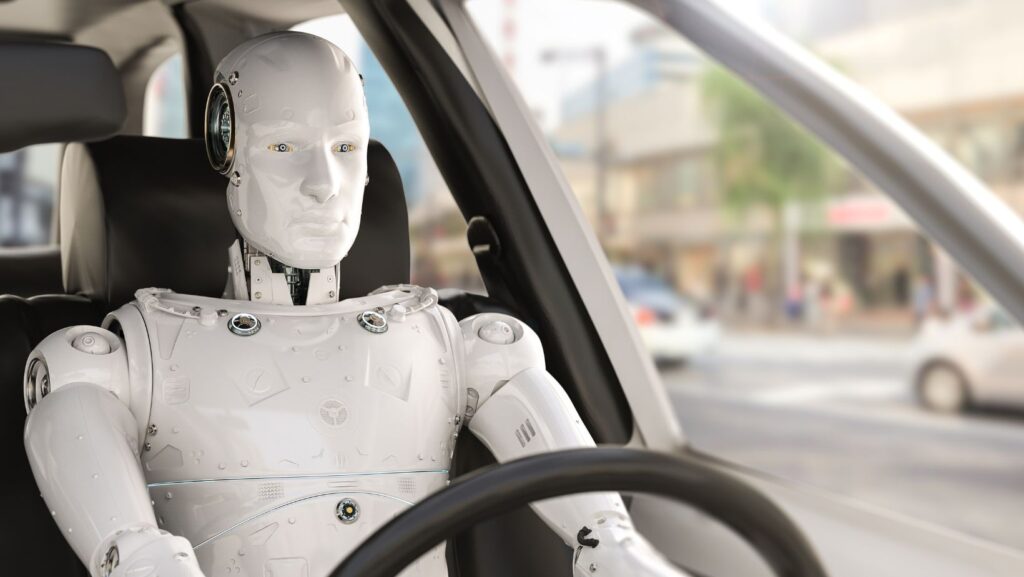
Artificial intelligence has become a quiet but powerful co-designer in the automotive world. It doesn’t replace designers, but it increasingly informs them—predicting preferences before drivers can fully articulate them. The result is a new kind of vehicle development cycle: faster, more reactive, and deeply rooted in behavioural data.
Data-driven design is reshaping the creative process
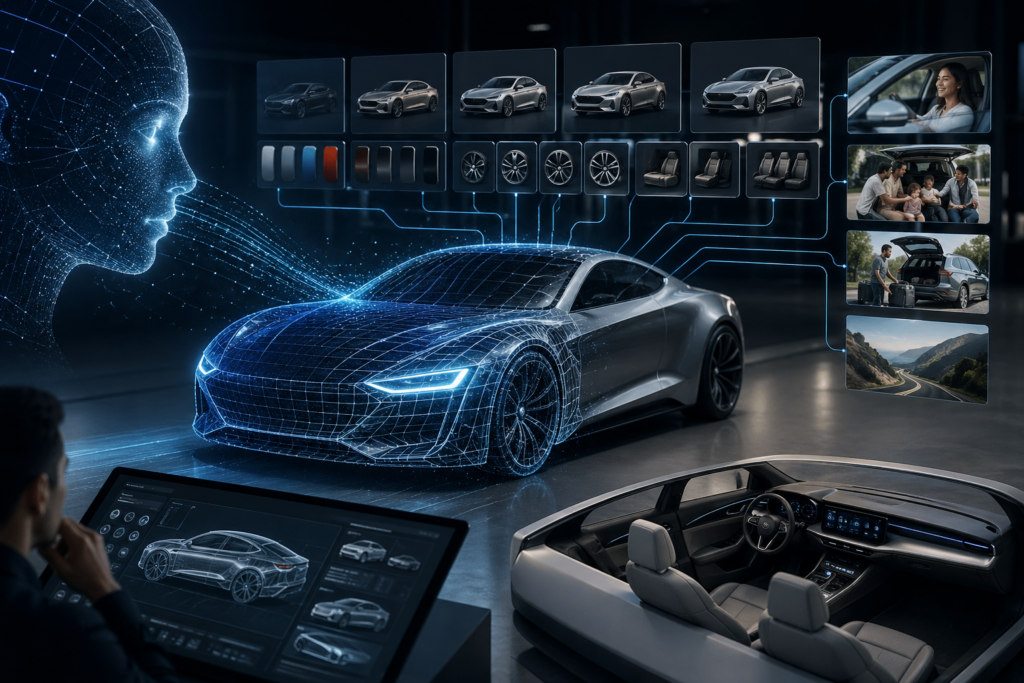
Modern automotive manufacturers sit on vast ecosystems of data. Everything from configurator choices and dealership inquiries to social media sentiment and regional sales trends is now analysed in real time. Machine learning models identify patterns that would be impossible for humans to spot manually.
For example, subtle shifts in consumer preference—such as a growing interest in matte finishes, blacked-out trims, or minimalist dashboards—can be detected early and fed directly into design pipelines. This means that by the time a “trend” becomes visible to the public, manufacturers may have already been developing concepts aligned with it for months.
What’s emerging is a feedback loop: consumers influence data, data informs design, and design then reshapes consumer expectations.
AI is influencing exterior styling more than we realise
Exterior design is no longer purely an aesthetic exercise. Algorithms now assist in evaluating which proportions, lighting signatures, and surface treatments perform best across different markets.
Headlight shapes, grille sizes, and even body crease angles can be tested virtually against thousands of simulated consumer responses. Some systems use generative design tools to produce hundreds of variations of a single concept, narrowing them down based on predicted appeal scores.
This doesn’t mean every car is becoming identical. Instead, AI tends to reinforce what already resonates with specific audiences. In Europe, that might mean restrained, clean lines. In other markets, more expressive styling may be favoured. The outcome is a more segmented but highly optimised design language across global brands.
Interior experience is becoming predictive, not reactive
If exterior design is about attraction, interiors are about retention—and AI is particularly influential here.
Manufacturers now analyse how drivers interact with infotainment systems, climate controls, seating positions, and even voice assistants. Eye-tracking and biometric data from test vehicles help determine which controls cause confusion or satisfaction.
As a result, interiors are becoming more streamlined, with interfaces designed around predicted behaviour rather than traditional layouts. Touchscreens are reorganised based on frequency of use, physical buttons are reduced where data shows they are rarely engaged, and ambient lighting is tuned to emotional response patterns gathered from user studies.
Some premium brands are even experimenting with systems that adjust cabin settings based on inferred mood, using steering input, driving style, and external conditions as indicators.
The feedback loop between social media and automotive design
Social media has accelerated this entire cycle. Platforms filled with car photography, modification culture, and influencer reviews act as a real-time focus group.
AI tools now scan millions of images and captions to identify what vehicles generate the most engagement. It’s not just about the cars themselves, but the details—wheel designs, colour combinations, stance, and lighting conditions all feed into predictive models.
This has created a subtle shift: cars are increasingly designed not just to be driven, but to be seen. Visual impact in digital spaces now plays a role in shaping physical production decisions.
Personalisation and identity in the algorithmic era
As vehicles become more data-informed, personalisation has become a key battleground. Drivers increasingly want cars that feel unique, even if they are built on shared platforms.
This desire for identity extends beyond paint colours and trim packages. It includes everything from software themes to subtle exterior details that signal individuality. In this landscape, even elements like registration styling and visual identifiers contribute to how a vehicle is perceived as “personal”.
For drivers investing in deeper levels of customisation, companies like Number 1 Plates reflect this wider cultural shift towards automotive identity, where the vehicle is seen less as a product and more as an expression of personal taste within a highly standardised manufacturing system.
The future: cars designed before we know we want them
Perhaps the most significant change is philosophical. Traditionally, cars were designed, launched, and then evaluated by consumers. Now, that sequence is beginning to reverse.
With predictive modelling, manufacturers increasingly aim to design vehicles that already align with anticipated demand. In some cases, AI systems can forecast not just what people like today, but what they are likely to prefer next year based on economic conditions, cultural shifts, and technological adoption.
This raises an interesting question: if taste is increasingly predicted, is it still entirely our own?
What’s clear is that automotive design is no longer just an art or an engineering discipline. It is becoming a data-driven interpretation of human behaviour—one where algorithms quietly shape the vehicles that define how we move, and perhaps even how we see ourselves.
The car has always reflected identity. Now, that reflection is increasingly filtered through mathematics.