
AI is moving fast, and so is the technology that powers it. Whether you’re building AI agents, chatbots, coding assistants, or other AI-powered apps, choosing the right inference engine can make a big difference. A good platform helps your models respond quickly, scale as your traffic grows, and keeps infrastructure management out of your way.
There are plenty of inference platforms available today, but they all have different strengths. Some focus on giving developers access to lots of open-source models, while others are built for custom deployments or global production workloads.
In this guide, we’ll look at three of the best inference engines in 2026: Telnyx, Together AI, and Baseten.
Top Platforms for Inference
Each platform has its own strengths, from global inference and production-ready infrastructure to flexible model deployment. So, here’s a closer look at what each one has to offer.
1. Telnyx
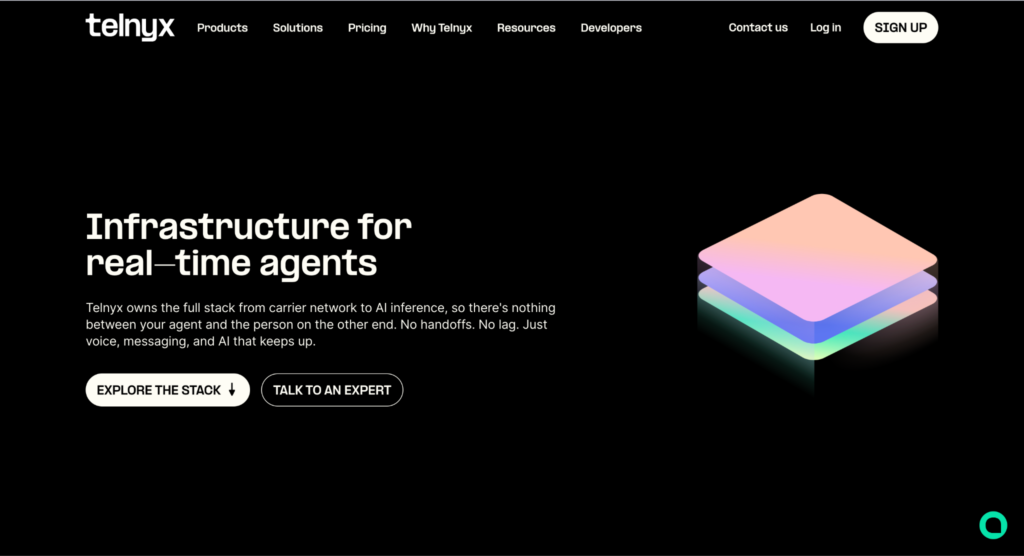
If you’re looking for an inference platform that’s ready for real production workloads, Telnyx is one of the strongest options available.
Instead of simply offering hosted models, Telnyx combines AI inference with its own global infrastructure. The company owns its network and GPU infrastructure, helping reduce latency while giving it more control over performance and pricing. It also hosts a carefully selected group of open-weight models, including GLM-5.2, Kimi K2.5/K2.6, MiniMax M3, and Qwen3.
- OpenAI-Compatible API
If you’re already using OpenAI, moving to Telnyx is easy. You can usually keep using the same SDK and simply change the API endpoint instead of rewriting your application.
- Global Inference
Telnyx lets you run AI closer to your users in regions like the Americas, Europe, MENA, and APAC. This helps reduce delays and can also make it easier to meet local data privacy requirements.
- Dedicated GPU Infrastructure
Telnyx runs its own GPU infrastructure instead of relying entirely on third-party cloud providers. This helps keep performance consistent while offering competitive pricing.
- Built for Production
The platform includes useful features like autoscaling, function calling, structured outputs, and fine-tuning. These are the kinds of tools developers often need when building AI applications that people use every day.
- Curated AI Models
Instead of offering hundreds of models, Telnyx focuses on a smaller collection that covers different use cases. This makes it easier to choose the right model without spending lots of time comparing dozens of options.
- More Than Just Inference
Telnyx also offers Voice AI, speech-to-text, text-to-speech, messaging, and telephony. Having everything on one platform makes it easier to build complete AI applications.
2. Together AI
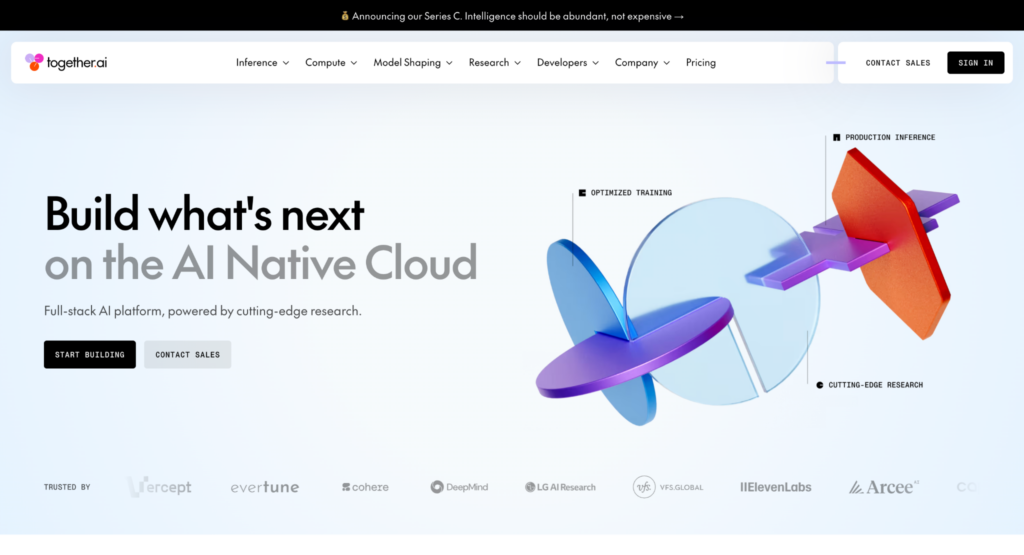
Together AI has become a popular choice for developers working with open-source AI models. Instead of focusing on a small collection, it gives users access to a huge library of language, vision, and image generation models.
- Large Model Library
Together AI gives developers access to a wide range of popular open-source models. This makes it easy to test different models and find the one that works best for your project.
- Flexible Deployment
You can start with serverless inference for smaller projects or choose dedicated infrastructure as your application grows. This gives teams flexibility as their needs change.
- OpenAI Compatibility
Many of Together AI’s APIs work similarly to OpenAI’s, so switching over is usually straightforward. Existing applications often need only small changes.
- Fine-Tuning
Together AI supports fine-tuning for supported models, allowing businesses to train models with their own data. This can improve results for more specialized tasks.
- Multimodal AI
The platform supports more than just text models. It also offers image generation and vision models, making it useful for a wider range of AI projects.
- Automatic Scaling
As traffic increases, Together AI automatically adds more resources to keep applications running smoothly without manual setup.
3. Baseten
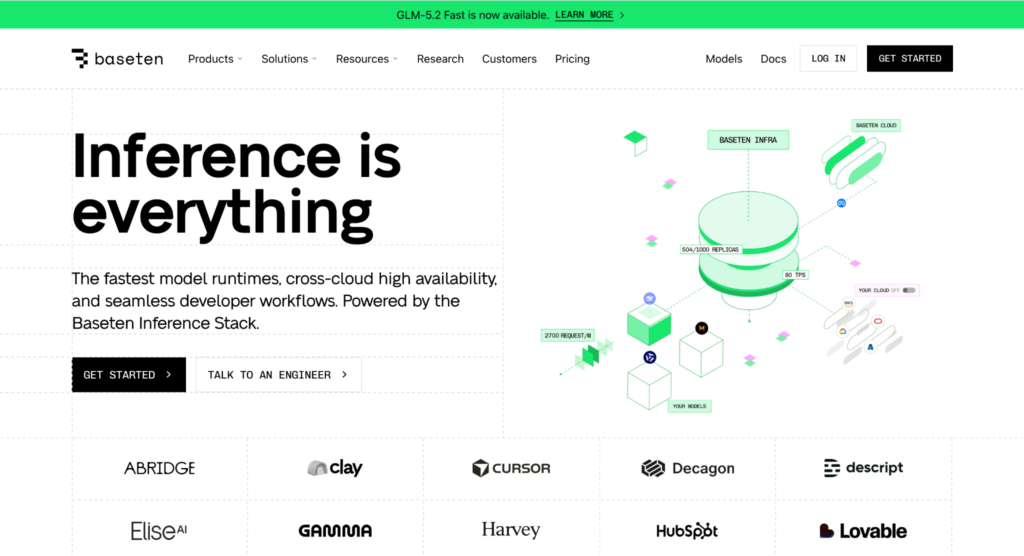
Baseten is designed for teams that want more control over how their AI models are deployed. Instead of mainly providing access to hosted models, it’s focused on helping companies run their own models efficiently in production.
It’s especially popular with engineering teams building custom AI products.
- Deploy Your Own Models
Baseten makes it easy to deploy custom AI models without having to manage your own infrastructure. This is useful for teams building their own AI products.
- Fast Performance
The platform includes built-in optimizations that help models respond quickly and use GPU resources more efficiently.
- Continuous Batching
Baseten groups requests together before processing them, which helps improve performance and reduce costs when handling lots of traffic.
- KV Cache Optimization
For language models, Baseten stores parts of previous calculations instead of repeating them every time. This helps speed up longer conversations.
- Structured Outputs
You can ask models to return responses in a consistent format, making it easier to connect AI with other software and workflows.
- Automatic Scaling
Baseten automatically increases or reduces computing resources based on demand. That means your application can handle more users without extra work from your team.
Conclusion
There really is no tool that can be the “best” for everyone, because it really depends on what you’re building.
If your priority is getting an AI application into production quickly, Telnyx is the strongest all-around choice. If having access to lots of open-source models is your priority, Together AI can also be a good option. And if you’re deploying your own custom AI models, Baseten might be worth considering.
The good news is that inference technology has come a long way over the last few years, so by choosing a platform that best matches your needs, you’ll definitely spend less time thinking about infrastructure and more time building great products.